

24/7 ONLINE SUPPORT
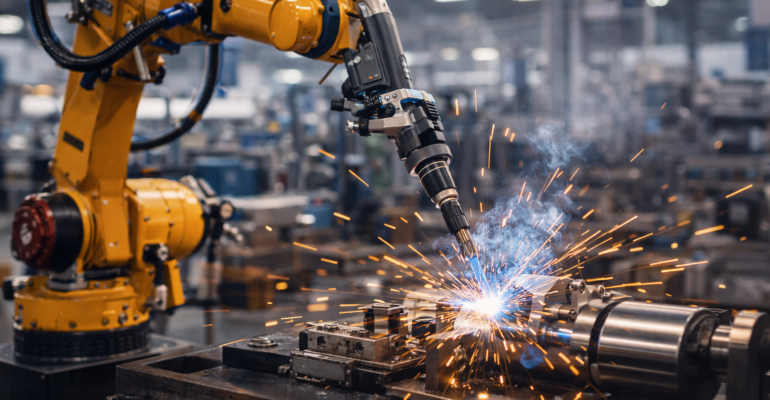
Welding & Laser Processing Solutions
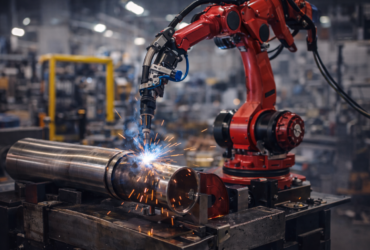
Modern manufacturing demands more than cutting and joining — it requires accuracy, structural integrity, and process control.
Improper welding or laser processing can lead to:
Distortion.
Weak joints.
Surface damage.
Dimensional inaccuracy.
Rework and delays.
AMT provides structured welding and laser processing solutions designed to support high-precision fabrication and machining environments.
Quality Industrial Performance
Precision fabrication is the foundation of accurate machining.
Our welding and laser process support helps manufacturers:
Maintain dimensional stability
Reduce rework
Improve assembly alignment
Ensure structural reliability
Enhance overall production efficiency
With AMT, fabrication and machining work together as one controlled system.
Freequently Asked Question
AMT provides structured operator and technical training to ensure your drilling, tapping, flow drilling, and workholding systems perform consistently in real production environments.
Our training programs are application-focused, practical, and tailored to your equipment and production needs helping your team operate with confidence, precision, and process control.
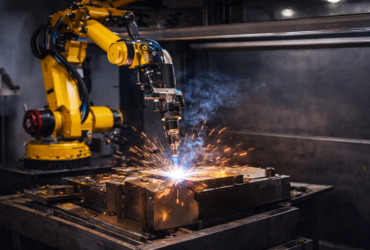
This includes guidance for thin-sheet welding, fixture-assisted welding, and fabrication processes integrated with machining requirements.
High precision cutting
Minimal heat-affected zone
Clean and burr-free edges
Reduced material distortion
Consistent repeatability
This improves downstream machining and assembly accuracy.
Excessive heat during welding can cause distortion, misalignment, and dimensional variation — which impacts clamping stability and machining accuracy.
We provide guidance to minimize distortion before machining operations.
We provide process guidance based on:
Material type
Thickness
Structural load requirements
Dimensional tolerance needs
Correct parameter selection ensures stable and repeatable results.
Laser processing produces clean edges and consistent geometry, reducing preparation time before machining.
We evaluate each application for compatibility.
Proper alignment, controlled distortion, and stable material preparation ensure better clamping performance and reduced rework during machining.
Dimensional inaccuracies
Increased rejection rates
Clamping instability
Assembly misalignment
Production delays
Engineering-driven process control improves overall production reliability.